
We've been doing this since 2000. Here's how it started.
We build the infrastructure Central Coast businesses run on. We stick around to manage it. Lattis has been doing this since 2000.

It started with phone systems.
Ted Dronen got into technology selling Lucent phone systems in the mid-to-late '90s. Back then, if your business needed phones, you called a guy. Ted was that guy. People around SLO County knew him as "Ted the phone guy."
Before telecom, Ted was a roadie. Right out of high school, loading trucks and setting up stages. You learn something doing that work — how a room full of gear has to come together so that what the audience hears sounds exactly right. Racks, cables, signal chains, power distribution. Everything has to be planned, connected properly, and tested before showtime. That sensibility never left. It just moved indoors and got an IP address.
Around 2000, he started Lattis. Phones led to data networks. Networks led to security. Security led to cameras and access control. Each step made sense because each one depended on the one before it.
Twenty-six years later, the phone systems are different. The networks are different. The job is the same — build it right, manage it well, and be there when something breaks.
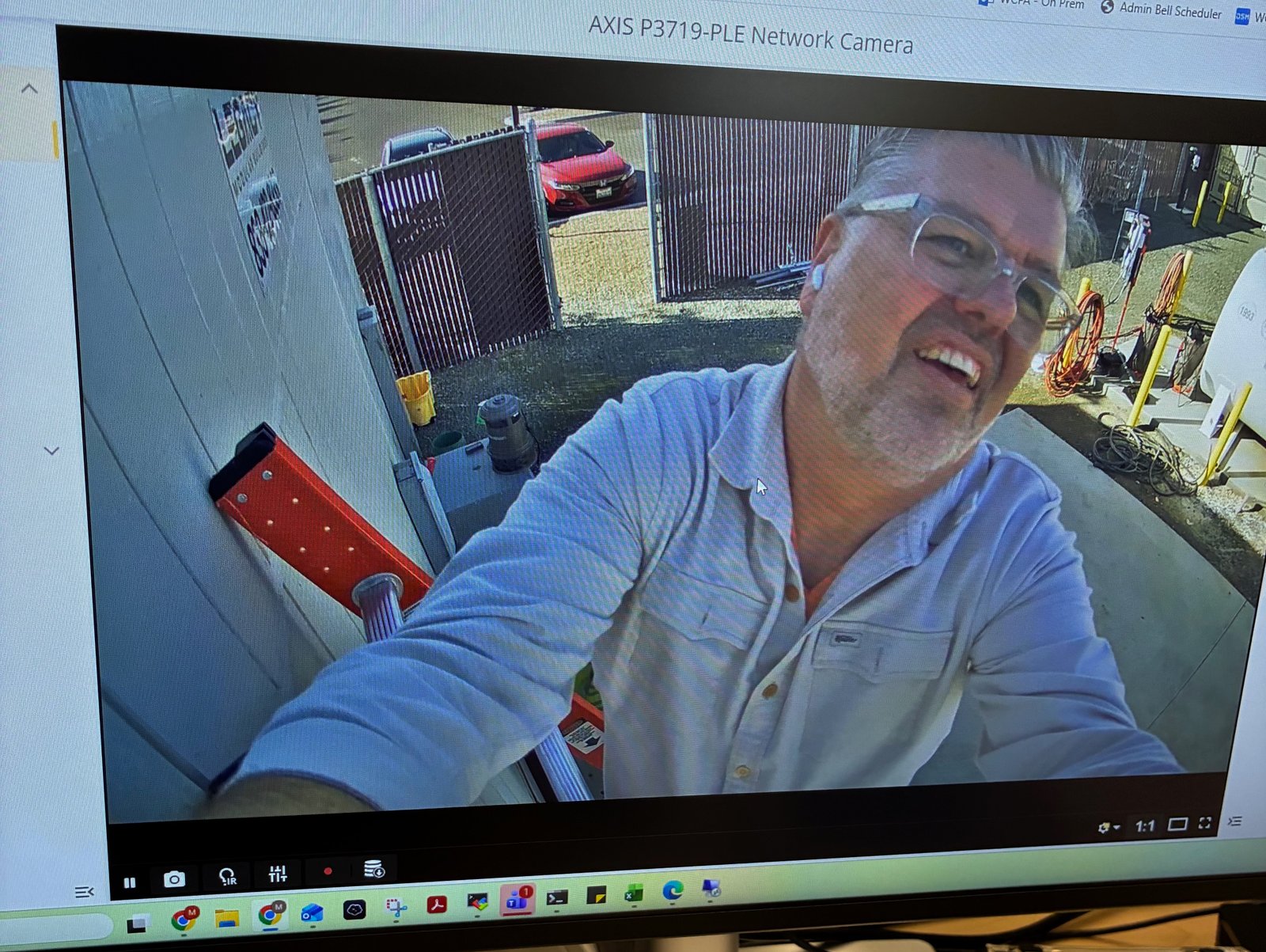
Testing an Axis P3719-PLE panoramic camera at a client site.
Why Lattis.
The name comes from ionic lattice crystal structures — something Ted remembered from a college chemistry lecture. Atoms arranged in a repeating three-dimensional scaffold, each one held in place by its relationship to every other.
He was standing in a server room. PBX in the corner, T1 lines coming through the wall, routers running Frame Relay, a firewall between the whole thing and the outside world. All separate systems, all starting to depend on each other. He saw where it was going — networks of networks, interconnected in all directions. A 3D scaffolding that everything else would eventually run on.
It's 2026 now. That's exactly what happened.

The network is the foundation. Everything else runs on it.
This isn't something we decided to put on the website. It's how the company has operated from the beginning.
Lattis has been working at the intersection of IT, voice, and physical security since before the industry started calling it convergence. That puts us in a rare position — because most providers only own part of the picture.
Traditional locksmiths and security integrators know access control hardware. What they often lack is the network depth to deploy it correctly. ASSA ABLOY's own field sales and engineering team recognized this — they called out Lattis as a standout partner specifically because of our network depth. That's not a common compliment in the access control space.
IT shops can light up a cloud phone system. What they typically can't do is bring the depth of a career PBX professional to the table. The real art in voice isn't the platform — it's designing call handling that makes the work easier for the people using it. Bridged line appearances, elegant ring groups, failover routing — done right, nobody thinks about it. Done wrong, it creates daily friction for every person who picks up a phone.
Cabling is where a lot of projects quietly cut corners. Copper-clad aluminum instead of solid copper. Mod plugs crimped in the field without certification testing. A continuity test that confirms the wire is connected but tells you nothing about whether it can sustain gigabit or 10G performance over its lifetime. We install Category 6A cabling and fiber to manufacturer certification standards — the kind that carries a 25-year performance warranty. That's not standard practice in this market. It should be.
Most integrators treat the network like plumbing — something that's already there when they show up. We treat it as the first thing to get right.
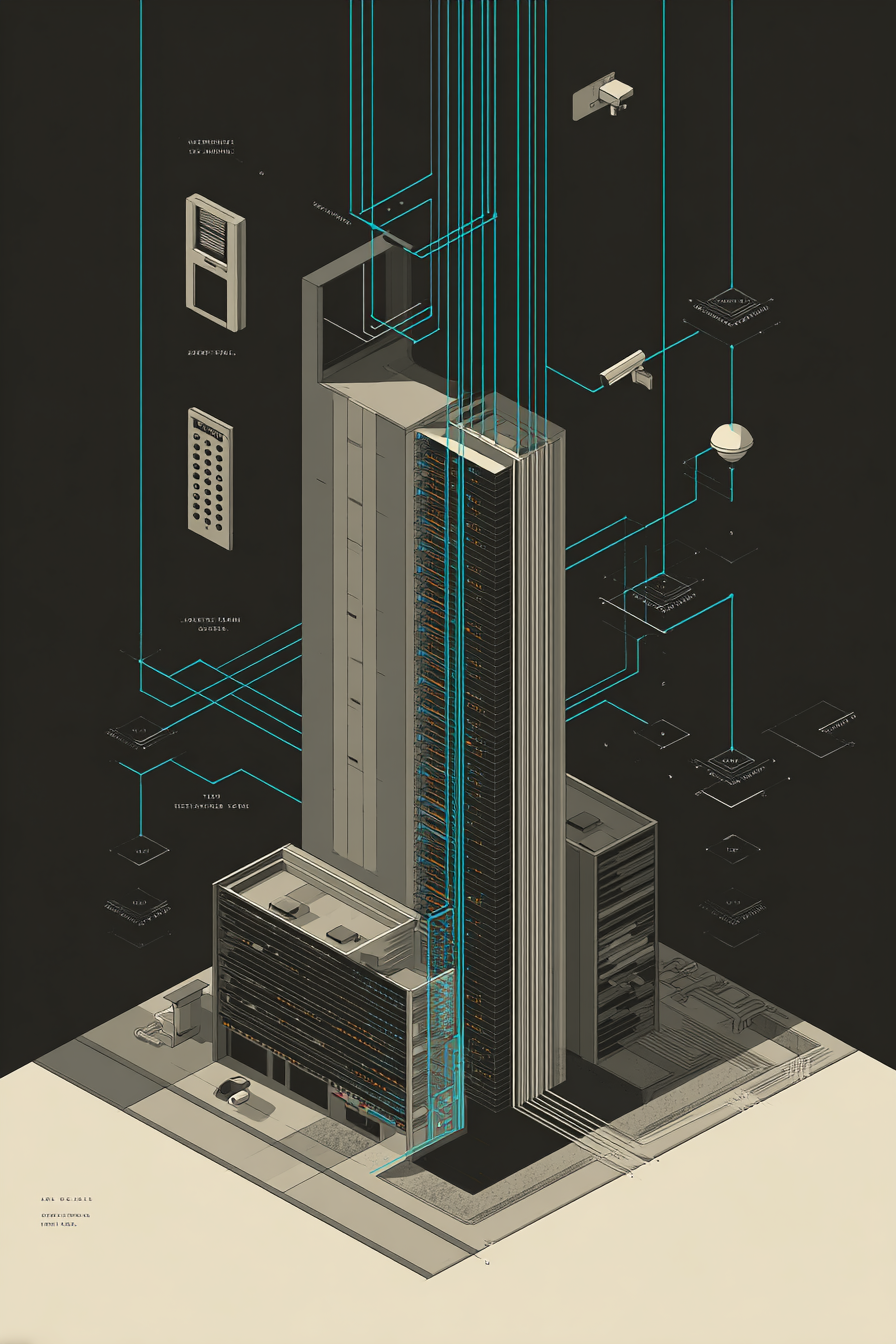
We still know voice. That matters more than you'd think.
Lattis grew up in telecom. Dial plans, SIP trunks, call routing, PBX failover — we've been doing this since before VoIP was reliable enough to bet a business on.
That background shows up in ways clients don't always expect. We can integrate a phone system with an intercom and an access control panel because we understand how all three protocols actually work. When a conference room sounds bad, we know whether the problem is the mic, the DSP, the network, or the room itself. That's not something you pick up from a vendor certification course. It comes from decades of making rooms sound right — and from a career that started long before the first SIP phone showed up.

Small team. Deep bench.
Lattis has fewer than ten people. That's deliberate.
We don't staff up to handle volume. We staff to handle complexity. The people here have real depth — networking, security, physical security integration, voice, fiber. When you call Lattis, you get someone who knows your environment because they helped build it. Not a dispatcher reading from a ticket.
Small also means we're selective about the work we take on. We'd rather do fewer projects well than spread thin across too many.
SLO and Santa Barbara Counties. This is home.

We're not a national company with a local office. We're based in Atascadero. We live here. Our clients are here. When we drive to a job site, we know the road.
The Central Coast has a specific mix of industries — agriculture, manufacturing, wine, professional services, private estates. These aren't verticals we targeted from a marketing plan. They're the businesses that are here. We know them because we've been working with them for two decades.
Most of our clients have been with us for years. Some since the beginning.
We've never relied on marketing. Most of our new clients come from referrals — someone we've worked with for a long time tells someone they know. That's how it's always worked and we're comfortable with it.
We grow by three to five new clients a year. That's enough to build the business without outgrowing what makes it work. Some businesses grow fast and spread thin. We'd rather grow deep. Every client gets the same team, the same attention, the same direct access to the people doing the work. That takes roots, not reach.

Straight talk. Open architecture. We show up and we stick around.
We'll tell you what we think. If your current setup is working, we'll say so. If it's not, we'll tell you why and what it would take to fix it. We don't manufacture problems to create projects.
We don't lock clients into proprietary systems that only we can service. We design open, standards-based systems. If you ever decide to leave Lattis — and some clients have — you're not starting from zero. The system we built still works.
We answer the phone. We show up when we say we will. We don't disappear between projects. These aren't differentiators. They're the minimum. But enough providers get them wrong that it's worth saying out loud.
Common questions.
The best way to find out is a conversation. But in general — we work best with businesses that have real infrastructure, real operational dependency on their network, and a preference for a long-term relationship over a one-time fix. If you're looking for the cheapest option or a vendor you can swap out next year, we're probably not it. If you want someone who knows your environment because they built it, we might be exactly right.
No pitch deck. No discovery call script. You tell us what you've got, what's working, what isn't, and what keeps you up at night. We tell you what we think. Sometimes that means we can help. Sometimes it means we can't, or that what you have is fine and doesn't need us. Either way you get a straight read.
Both, depending on what's there. We're not going to tell you to rip out something that's working just to sell you new gear. If your infrastructure is solid we'll manage it. If it's not we'll tell you why and what we'd do differently. We work with Cisco, Meraki, Axis, GoToConnect, Avaya, and most of the platforms Central Coast businesses are already running. We're not going to make you start over unless starting over is actually the right answer.
You call us. Not a help desk. Not a ticket system that pages someone eventually. If you're a managed services client and something is down, you have a number that reaches someone who knows your environment. That's the arrangement. We don't promise perfection — networks are complex and things happen. We promise you won't be alone when they do.
We hear this a lot. Usually the story involves a vendor who oversold, underdelivered, and disappeared between projects. Or someone who locked everything into a proprietary system so leaving was painful. We're not going to tell you we're different — we're going to suggest you talk to clients who've been with us for ten, fifteen, twenty years and ask them directly. Steve Malfo at Bedford Enterprises has been a client since 1998. That's a longer answer than anything we could put on a website.
We take three to five new clients a year. Whether we have capacity depends on timing. The best way to find out is to reach out. If the fit is right we'll make it work. If the timing isn't there we'll tell you that too.
We've been here a long time. We're not going anywhere.
If that's what you're looking for, let's talk.
Talk to Lattis