
Cat6 tops out at 328 feet. After that, you need fiber.
Fiber optic backbone design and installation for the Central Coast.
Fiber Optic Backbone Design & Installation
Copper cable has a hard limit. Standard Cat6 runs out of headroom at 328 feet for full gigabit performance — and extended Cat6 offerings, while they stretch that further, still top out well short of what many facilities actually need. When your building is large, your campus spans multiple structures, or you're connecting buildings across a property, fiber is the right answer.
Most vendors avoid the hard part.
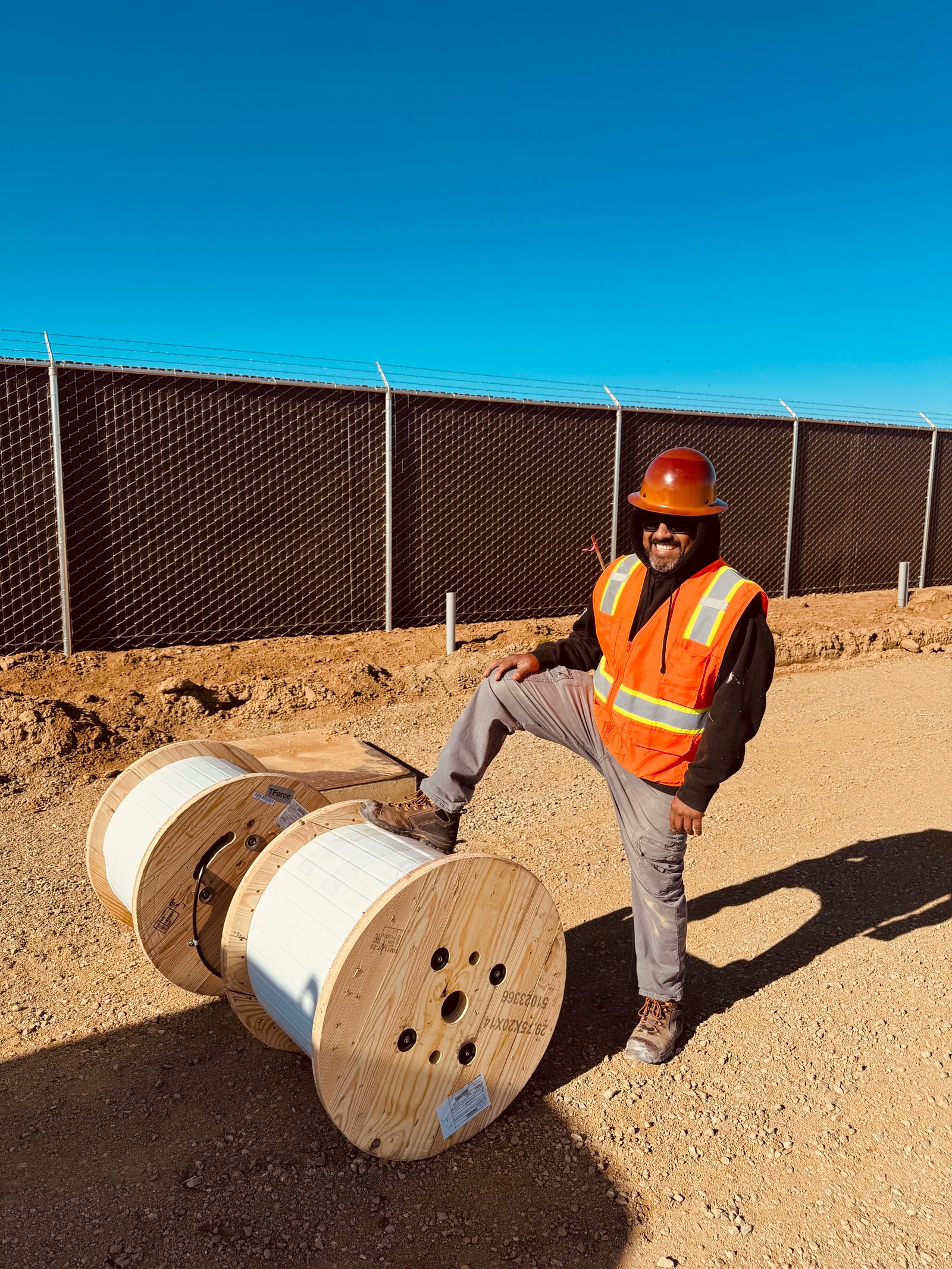
Fiber installation looks straightforward until something goes wrong. A bad termination. The wrong cable type for the environment. A bend radius that degrades signal over time. A lot of local vendors avoid fiber termination entirely — they pull pre-terminated cables and hope the lengths work out. We don't. We design the pathway, select the right cable — single-mode OS2 for long runs, multimode OM4 where it fits — and we terminate and fusion splice in the field. Then we test and certify the installation.
What happens when cabling isn't tested and certified.
What's included.
- Copper cable has a hard limit — we design around it
- Single-mode OS2 for long runs and inter-building backbones
- Multimode OM4 where it fits
- Field termination and fusion splicing
- Bend radius and pathway planning
- Cable selection for the environment
- Full certification testing
- For electricians, GCs, and facilities managers — bring us in early
If you're an electrician, general contractor, or facilities manager working on a project in SLO or Santa Barbara County that involves data infrastructure, we're the team to bring in early. Pathway planning, bend radius management, cable selection — these decisions are easier to get right before the walls close than after.
Bring us in early. It's easier that way.Common questions.
Every fiber installation covers the same ground — backbone design, pathway planning, cable selection, termination, and certification. The specifics depend on your application. Inter-building runs have different requirements than in-building risers. Industrial environments have different requirements than office buildings. We start with what you're trying to accomplish and work backward to what the installation needs to look like. If you have drawings, send them. If you're still in planning, that's a good time to talk.
Fusion splicing joins two fiber ends by melting them together with an electric arc — the result is a continuous glass path with minimal signal loss. Mechanical splices and pre-terminated assemblies introduce more loss and more potential failure points. In a backbone installation with multiple connections, that adds up. The reason most local vendors avoid it: the equipment is a serious investment. A professional fusion splicer runs $8,000 to $15,000. A full copper and fiber certification analyzer is another $15,000 to $28,000. Most small shops don't have it — so they work around it. We made the investment because the work demands it.
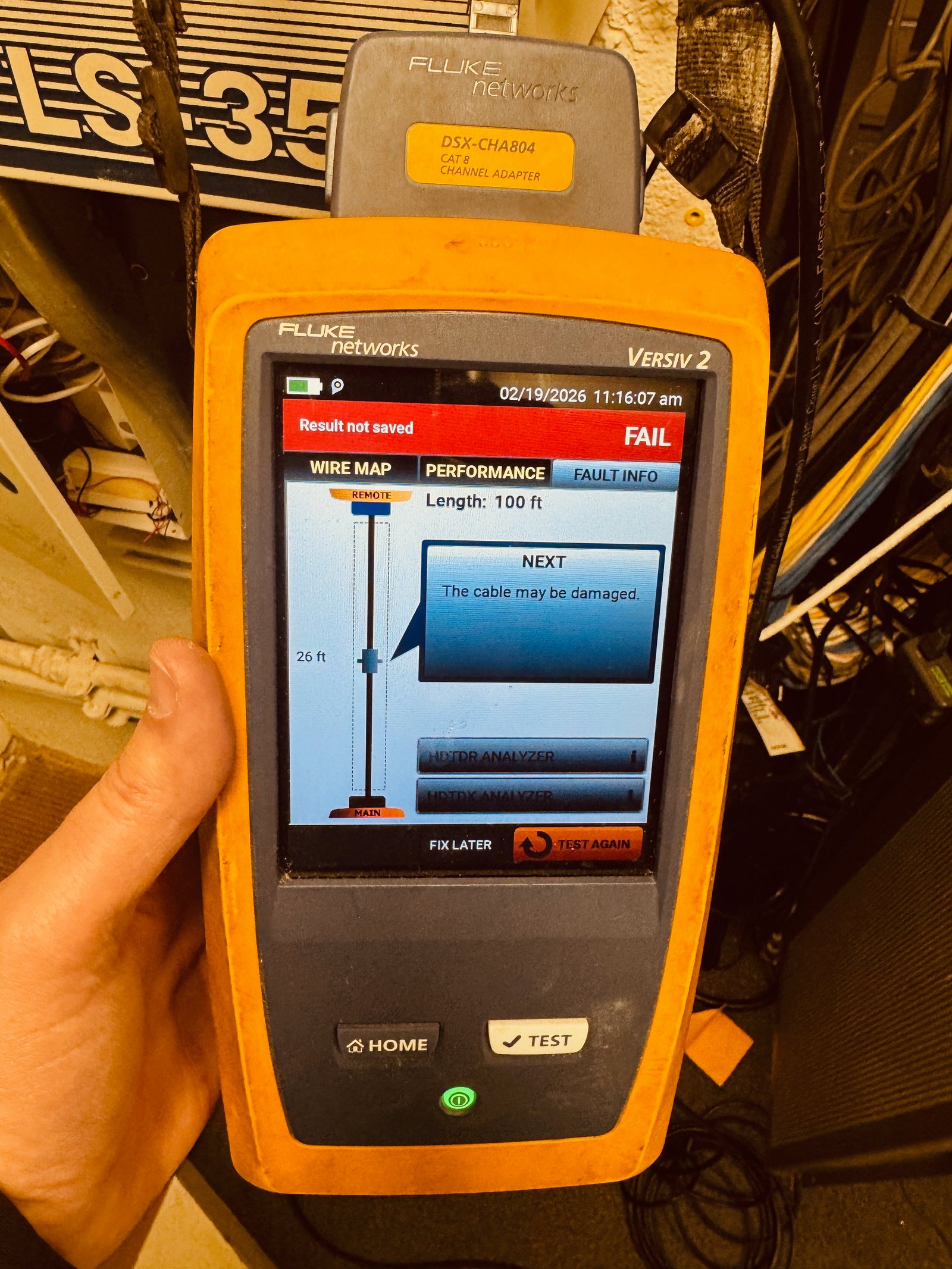
Yes. Every run is tested and certified using professional-grade equipment. We document the results and provide certification reports. If a run doesn't pass, we find out why and fix it before handoff — not after the walls are closed.
We plan and coordinate pathway design as part of the project. Bend radius management, pull box placement, conduit fill calculations, slack management — these decisions get made during design, not figured out in the field. If you're bringing us in during the design phase, we'll work with the architect or engineer of record to get the pathway right from the start.
Yes. We read and work from architectural and electrical drawings. If you need us to produce fiber pathway documentation or as-built drawings, we can do that too.
We hold manufacturer certifications for the cable systems we install. Our installations are performed to manufacturer warranty requirements. Certification test results are provided at project closeout.
As early as possible. Pathway decisions, conduit sizing, pull box locations, and sleeve placements are significantly easier to get right during design than after framing is complete. If you're in preconstruction, that's the right time to call.
Yes. We're accustomed to working alongside electrical, low voltage, and general contractors. We coordinate pathway conflicts, sequencing, and inspections as part of the project. We show up when we say we will and don't create problems for other trades.
We work on projects ranging from single-building IDF installations to multi-building campus backbones across SLO and Santa Barbara Counties. If you have a project that involves data infrastructure, we're worth a conversation.
One team. No finger-pointing. One number to call.
If you're looking for a technology partner, let's start with a conversation.
Bring us in early. It's easier that way.